Exploring the Future of Agile Coaching with AI: Yuliia Pieskova’s Insightful Session at XP2024

At the recent XP2024 conference in Bolzano, Italy, Yuliia Pieskova, COO and co-founder of AI startup Alpha Affinity, delivered a thought-provoking session titled „Agile Coach v.2, Powered by AI.“ Yuliia’s deep knowledge and passion for her subject shone through, leaving a lasting impression on all attendees.

In her session, Yuliia addressed the evolving landscape of agile coaching and the disruptive potential of AI in this domain. She highlighted how AI tools can support the role of Agile Coaches by offering unprecedented opportunities. The core of her presentation was predicting what an AI-powered Agile Coach would look like in the near future and assessing whether this synergy could drive the business value of the role to new heights.

Yuliia began by exploring the unique capabilities that AI tools bring to Agile Coaching. These capabilities include improving change management implementation, refining negotiation strategies, and providing personalized guidance on everyday situations. By leveraging AI, Agile Coaches can identify the most promising areas and avoid missing out on the significant benefits these technologies offer.

As a co-founder of a data startup, Yuliia emphasized the importance of understanding how AI technologies work and their limitations. She pointed out that without a deep understanding of these aspects, it is easy to fall into potential pitfalls. Therefore, her session also delved into what Agile Coaches need to know about AI, alongside the essential skills they need to develop to navigate this new landscape effectively.

Yuliia’s background in teaching and her extensive experience in leading and scaling distributed international teams added a rich layer of practical insights to her presentation.

During her session, Yuliia encouraged her audience of Agile Coaches to explore how generative AI can support their daily work. Using real-life examples, she demonstrated how collaboration with an AI companion could reduce the workload without compromising quality. This approach made it easier for the audience to imagine the practical applications of AI in their coaching practices.

However, Yuliia was also careful to highlight potential traps and pitfalls associated with AI. She stressed the importance of not relying solely on AI without verifying sources and understanding the context. This balanced perspective ensured that attendees were well-prepared to leverage AI effectively while being mindful of its limitations.
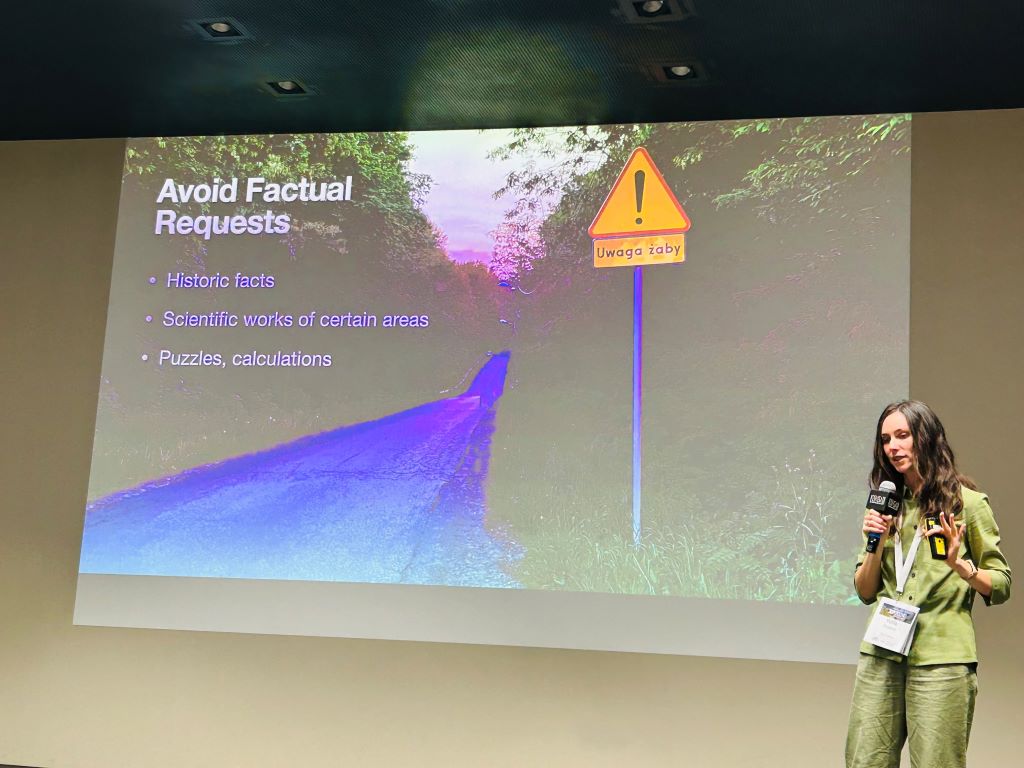
After her insightful talk, Yuliia engaged with the audience in a Q&A session, displaying her knowledgeable and approachable demeanor. Her responses to the questions were both kind and informative, further cementing her reputation as a leading expert in the field.

Many attendees, including myself, were eagerly looking forward to her practical workshop following the talk. The workshop provided a hands-on experience with well-prepared examples of how AI could assist in everyday challenges faced by Agile Coaches. This session was invaluable, offering practical knowledge and reinforcing the theoretical concepts discussed earlier.

Yuliia Pieskova’s session and workshop at XP2024 was a highlight of the conference, showcasing her expertise and forward-thinking approach to Agile Coaching powered by AI. Her insights and practical examples provided a clear roadmap for Agile Coaches looking to embrace AI and enhance their coaching practices.
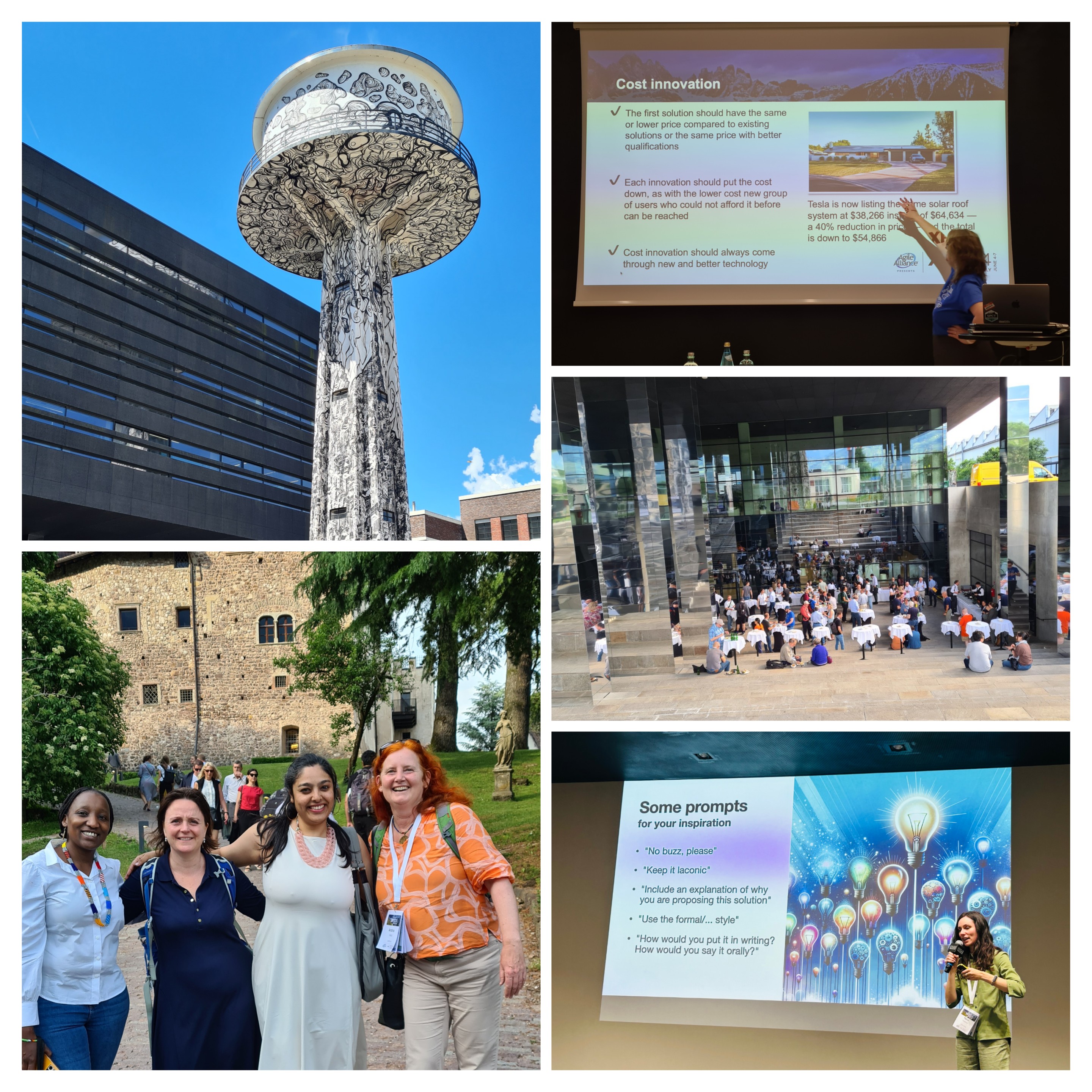
A great XP2024 conference with agile topics on crisis, AI and all the rest

At the beginning of this month, I had the pleasure of attending once again one of my favorite agile and lean conferences—XP 2024, the 25th International Conference on Agile Software Development in Bolzano, Italy. One thing I appreciate about this conference is the excellent mixture of industry practitioners, university researchers, and a select group of well-known independent agile experts.

Getting to the site from Nuremberg was challenging due to severe flooding in the Munich region, a stark reminder of the climate crisis. Train services were disrupted, forcing me to take a detour through Passau and Linz, with an unexpected overnight stay in Innsbruck due to a missed connection. Consequently, I missed the Wednesday morning keynote by the wonderful Diana Larsen, co-author of the well-known book „Agile Retrospectives,“ recently published in its second, revised edition. Despite this, many great talks were yet to come.

Maarit Laanti delivered two speeches, one based on her extensive experience as an Agile Enterprise Coach and contributor to the SAFe model. In her second talk, „Accelerating the Digital Revolution: Agile Hardware and Sustainability,“ she provided several insightful examples of how companies can benefit from agile methods. She explained how these methods contribute to sustainability goals by enabling development, production, and transportation with less material, less energy, and more cyclic usage of resources.

Semira Allen delved into the heart of Gen Z, convincing us to recognize their potential as torchbearers of agile innovation. While we shared some doubts about how to pave the way for them, she highlighted how crucial it is to harness their potential in our company environments.

Ondrej Dvorak shared his experience of applying Lean Startup methods to a crisis situation, specifically helping people fleeing Ukraine by designing a web portal to connect them with legal support in various countries. His presentation was a valuable reminder of how much can be achieved by a small group of dedicated individuals during a crisis, and how these methods can also be applied to new business ideas in more typical circumstances.

Another fresh voice in agility was Gladys Ng’weno, an Agile Coach from Nairobi, Kenya. She applied her agile coaching skills, honed in her work with software teams, to a cross-functional team in Kenya’s Maasai Mara conservancies. This team, composed of biologists, rangers, and local representatives, aims to balance the needs of wildlife, tourism, and the local population.

Some presentations deserve their own articles:

Yuliia Pieskova, the young CEO and co-founder of AI startup Alpha Affinity, gave an inspiring presentation titled „Agile Coach v.2, Powered by AI.“ We were all excited to apply the strategies and tactics she shared. Additionally, she facilitated a workshop to practice prompts for agile coaches needing technical support. I was impressed by her speaking skills and professionalism.

Hendrik Esser, a well-known expert in agile transformations and scaling at Ericsson, is now the top manager for Ericsson’s Cloud IMS Solution. His new presentation, „Agile and the Management Grind – My Journey to Complexity Leadership,“ emphasized the importance of adapting leadership styles to the complexity of each topic. His lively talk culminated in a table that made the choices easily transparent.

Overall, it was a fantastic experience to be there, reconnecting with great people who have significantly contributed to agility in many companies, including our Datev eG in Germany. Special thanks to Diana Larsen, Maarit Laanti, and Hendrik Esser for their invaluable contributions.

The 25th XP conference was also an opportunity to reflect on past conferences, bringing to my mind especially the teachings of Mary and Tom Poppendieck.

It was wonderful to meet and get to know many new colleagues who are passionate about agile methods and will undoubtedly advance the field even further. Thanks to the organizers and the program team, headed by Xiaofeng Wang—You rocked it!

„Creating an agile learning experience for managers“ – presentation and workshop at #XP2017 conference in Cologne

The agile transition of DATEV‘s product development organization has started.

DATEV was founded in 1966 by a visionary tax consultant as a common IT backbone for himself and his colleagues. The then recently emerged mainframe computers promised to solve their common need for correct calculation in a world of increasingly complicated and ever-growing legislation. – This bold idea transformed the initial startup into a constantly growing company in form of a cooperative – the main customers are also the owners of DATEV, therefore it is called “DATEV eG” in German.  Today,  40 000 tax consultants in Germany are DATEV members. 12 million employees get their monthly pay slip via DATEV software. The members use DATEV’s financial accounting software on behalf of 2.5 million small and medium sized companies. DATEV’s own financial numbers have been in the black every single year since its foundation.

The customer feedback has been positive over many years, with software solutions which are not always easy to use but contain the correct implementation of complex legislation. Now we need to evolve towards new web based products which will support the digitalization and automation of the members’ daily workflows, as well as providing faster customer and market feedback cycles. So the purpose of the agile transition should be clear, yet it is not at all easy to create a sense of urgency among the middle management considering the success story that is still true today.


In 2016, we created a learning event for the approximately 200 middle managers. We designed a two day event with two main goals:

  1. The managers should understand the challenge of DATEV’s digitalization strategy
  2. They should learn that an agile transformation is needed in order to support this strategy and that they would play an active role in it

The methods we used for this event were a combination of:

  • Very short speeches by the top management supporting these goals
  • An information market where the first projects in which prototypes of new digital products had been created were presented in a self-organized way by team members of these projects
  • The managers selected the most important obstacles these projects were facing, to be solved by themselves, and started working 
  • A retrospective-like setting in which the managers analyzed and started to develop solutions to these problems
  • The whole event was facilitated by team members who were recruited from the company’s in-house agile community

The outcomes of this first event were three working groups working on the most important obstacles according to the voting of the managers, and a quite positive feedback.

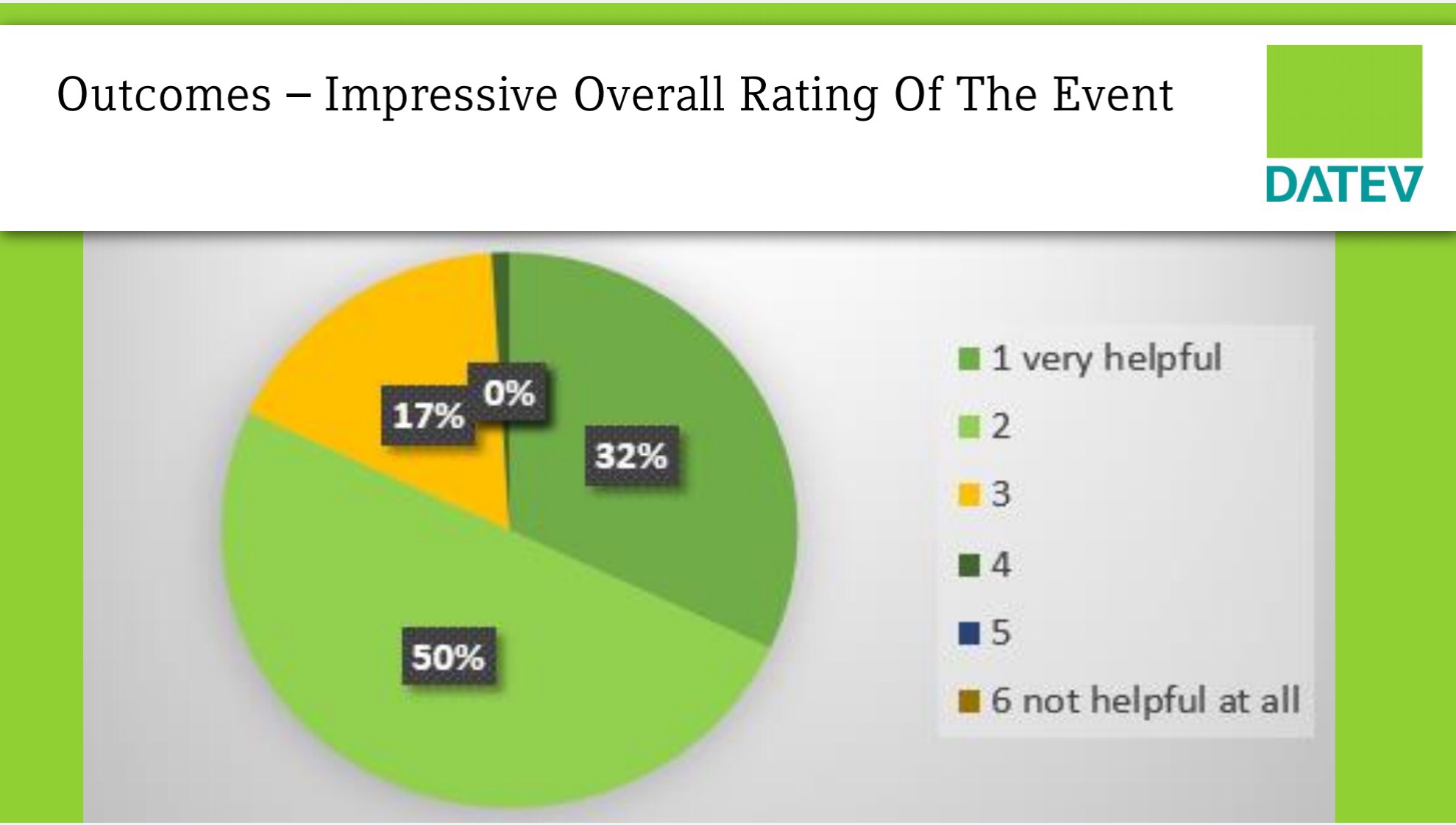
The overall concept of the two-day event was rated between very helpful and not helpful at all – in 6 steps. More than 80% of the participants chose the two best ratings. They were especially pleased with how well the event was facilitated by the team members.

One feedback given during the event to the top management was that direct communication with the team members must take place more rapidly.  The top management promptly put this into practice on the second day of the event by  finding and announcing a date for an information event for all 1800 team members.
All three work groups working on the top three problems developed results in the following weeks, which were presented and discussed in a second event. The third group working on “goals, metrics and a master plan for a complete agile transition” initiated a thorough analysis of the situation, resulted in the top management forming an agile transition team and calling everybody to action during the second event. There all sub-organizations started their own agile transition teams and plans.

Still the development organization as a whole is overburdened with work due to a big upfront planning process in which all of the work for one calendar year has been defined and estimated and committed by the management until July of the previous year. This was the fourth problem addressed by top management itself. A team worked on this process during the next couple of months, with the goal to rely on rough roadmaps instead and to introduce three-monthly portfolio planning cycles. Now in a third event end of April 2017, we have worked with the managers on this topic in order to get everybody into re-defining their current product development goals so that they can be measured and sliced down into smaller sub-goals which result in deliverable slices of products. 

Interested? You can here more about it on Thursday May 25th  in my „Creating an agile learning experience for 200 managers“ presentation and workshop with Christina Busch at XP2017 conference in Cologne.

Large Scale Agile at XP2013 Vienna – exchanging knowledge at a great conference!

From my perspective, the 14th International Conference on Agile Software Development XP2013 in Vienna was a great success. It took me to another level of confidence about what is needed to create and sustain a large scale agile organization.

The XP conferences are traditionally about programming and testing in an agile – XP – way, and organizing the team so that it supports XP practices. But they have grown into a conference that also covers  product ownership and design, leading agile teams and organizations, and even extending agile to the rest of the organization – this is agile real life in the industry.  What I like very much at XP conferences in general is the good mixture of experienced agile people from industry, some very well known consultants, and a lot of academic researchers who also are working close to industry about agile topics.

image

(Photo: Hubert Baumeister)

On the first day I got absorbed by the Executives & Managers Track with firsthand experience from four different companies: ABB, Ericsson, Johnson Controls and Nokia. Most valuable! The managers were speaking openly about what it takes to get agile, how their company transformation programs took one step after the other to establish agile on all levels. And this is still an unfinished journey, but it has a clear north. An important point from the talk of Hendrik Esser, who is Head of Portfolio and Technology Management at Ericsson, is

To embrace change, you have to change 3 things together
· Culture
· Practices and process
· Structure

You should never see agile as a process only, this will inevitably lead to failure. The most important cultural foundation for the agile transformation is building trust, and on top of the trust you can build transparency.

These three important transformations were mentioned by Per Branger from ABB in Sweden, but are basically identical to what Ericsson is doing:
· Continuous Portfolio Management
· Continuous Release Management
· Continuous Development

When they noticed at ABB that they are really a big software developing company, coming from a background of electrical engineering, they launched a massive knowledge and skills improvement program. The remarkable thing is that they measure progress by self-assessment of every developer against description of expected skills, and that the training comes in small portions and by self-assignment as well. Wiki based knowledge bases and Q&A tools that remind a bit of the famous stackoverflow website support the learning as well.  “Carrots, no sticks” opens also the path to using common tools.

Gregory Yon is Agile Coach at Johnson Controls and talked about how he is extending agile into the rest of the organization, to the non-development teams as well as convincing different levels of management from the agile values and needs. From him as well as from the other managers I learned that we can never communicate too much to higher management about the advantages of agile, and that we need  to measure things and compare with previous projects to show how we have advanced since the old times of waterfall.

Jorgen Hesselberg, Senior Manager, Enterprise Agile Transformation, Nokia (Chicago US) explained how they are using on all levels Agile Working Groups, mixed from management and project roles, to start and sustain agile transitions at each Business Unit, and keep them up and to extend agile to the whole company. The positive results of agile on the results as well as on the employee motivation are impressive.

My own presentation on our Distributed Product Owner Team for an Agile Medical Development was on the second day, and I loved the discussion with a couple of other speakers and participants about the needed knowledge and skills for this role, and the needs for communication in the PO team and with teams and customers. I have also learned that there is actually an open group of experts from industry and research with the goal to foster software product management excellence across industries, the International Software Product Management Association (ISPMA) , who are interested in collecting such practical experience, and are creating resources for professional software product management training.

At the academic track, I found a couple of presentations on the last day very interesting: A research paper by Jeanette Heidenberg, Max Weijola, Kirsi Mikkonen, and Ivan Porres – A Metrics Model to Measure the Impact of an Agile Transformation in Large Software Development Organizations asks whether an agile transformation was worth the effort. For this, they were looking for metrics that support agile values, focus on the whole organization, not individual or teams, and are applicable to both waterfall and agile projects. Also they should be feasible to collect for past and ongoing projects, in any size of project, and be objective and clear. They did an iterative approach with first formulating the goal, then ask practitioners for metrics used, compare them against their values and goals, and finally select a collection of metrics. They have some really helpful metrics that we can apply to learn how much we have already improved through agile, at least in some aspects.

The paper Continuous Release Planning in a Large-Scale Scrum Development Organization at Ericsson by Ville Heikkilä, Maria Paasivaara, Casper Lassenius, and Christian Engblom was complementing very well with the talk of Hendrik Esser, as they are exactly describing how the release planning for individual features works, and which experiences people at Ericsson had with this method.

Of course there were also great keynote speakers at XP2013 in Vienna, a helpful Open Space, a wonderful conference reception, and great conversations in the breaks.

image

As always, thank you very much for the photos, Hubert Baumeister.

The next XP conference will take place in May 2014 in Rome, which is also a nice place to go to.  I will convince some of our colleagues and managers of submitting a talk and participating – we have a lot of experience we can share!

Best Regards
Andrea